In today’s luxury market, “prime” is no longer defined by zip code alone. For discerning buyers in Washington, DC, true value now lies at the intersection of walkability, wellness, and privacy.
This shift is subtle—but it’s reshaping where affluent households choose to live.
Prime Has Moved Beyond Prestige
For decades, prime real estate was shorthand for size, status, and proximity to power. While those factors still matter, they’re no longer sufficient on their own.
In 2026, high-net-worth buyers are asking different questions:
-
Can I walk to the things I actually use?
-
Does this neighborhood support my physical and mental well-being?
-
Can I enjoy privacy without isolation?
The answers to those questions are increasingly driving buying decisions—sometimes more than the address itself.
Walkability as a Luxury Multiplier
Walkability is no longer a lifestyle preference; it’s a form of quiet efficiency.
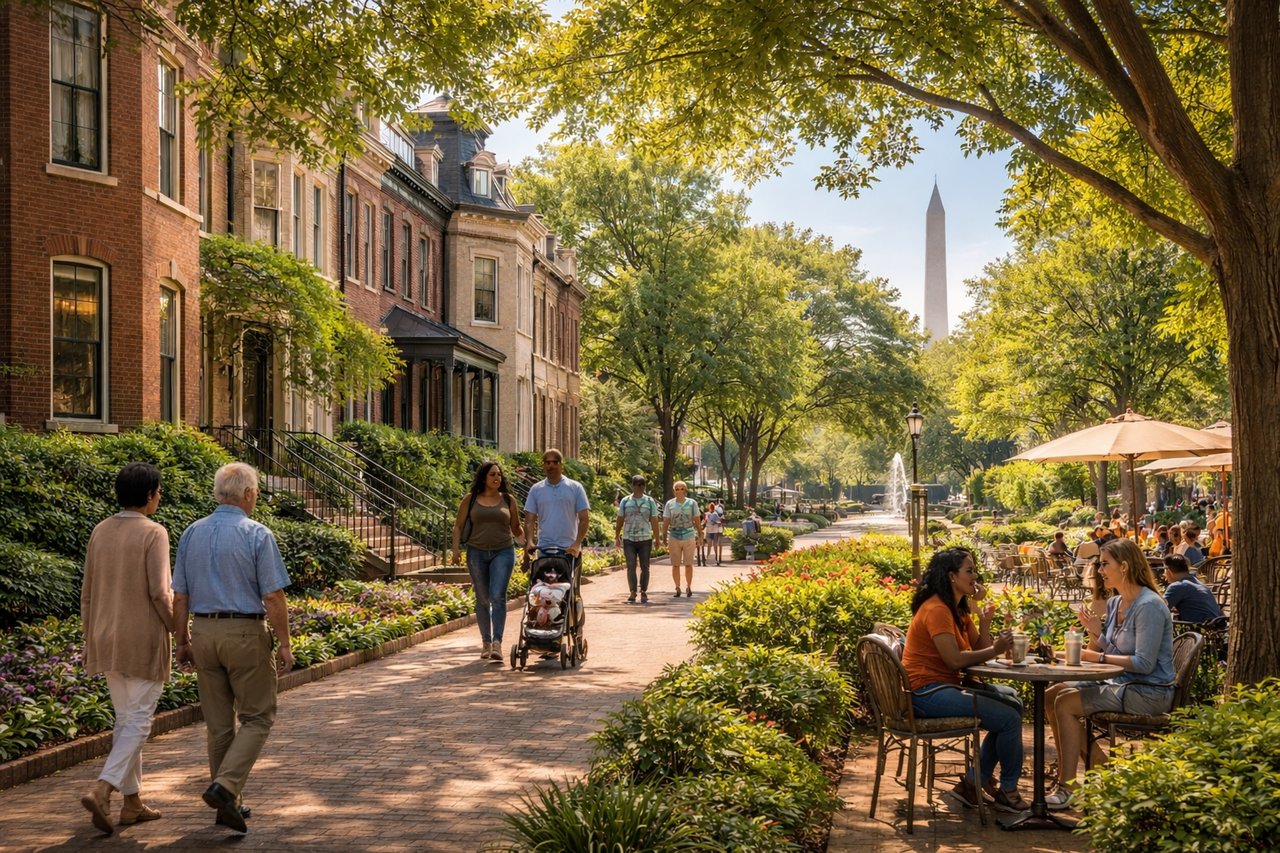
Neighborhoods that allow residents to walk to parks, cafés, cultural venues, and daily essentials are outperforming because they:
-
Reduce reliance on cars and commute stress
-
Support aging in place and multigenerational living
-
Enhance daily quality of life without requiring more space
For affluent buyers, walkability translates to time reclaimed, which has become one of the most valuable assets of all.
Wellness Is Now Embedded in Location
Wellness used to be something added to a home—gyms, spas, meditation rooms. Today, it’s built into the neighborhood itself.
Prime areas are increasingly defined by:
-
Access to green space and tree-lined streets
-
Calm traffic patterns and noise buffers
-
Proximity to healthcare, fitness, and wellness services
This is particularly important for seniors, caregivers, and families planning for long-term living. Wellness isn’t about luxury amenities—it’s about sustainability of lifestyle.
Privacy Without Isolation
One of the most notable shifts among high-net-worth buyers is the desire for privacy without retreat.
Rather than gated separation or distant sprawl, today’s buyers are seeking:
-
Homes that offer seclusion through design, not distance
-
Neighborhoods that feel intimate, not exposed
-
A sense of community without constant visibility
This balance is especially appealing to multigenerational households, public-facing professionals, and retirees who value discretion alongside engagement.
Why This Matters for Long-Term Value
When lifestyle priorities change, market performance follows.
Neighborhoods that deliver walkability, wellness, and privacy tend to:
-
Maintain consistent demand across market cycles
-
Attract buyers at multiple life stages
-
Hold value even when broader markets soften
In other words, these areas don’t just feel better to live in—they perform better over time.
The Takeaway
“Prime” in Washington, DC is no longer about being seen—it’s about living well.
For buyers, this means evaluating neighborhoods through the lens of daily experience, not just reputation.
For sellers, it means understanding why your location matters now—and positioning it accordingly.
The most successful real estate decisions in 2026 aren’t driven by headlines. They’re guided by how people actually want to live.